Rasta Dusty: A Bold Handwritten Font for Crafters & Sellers
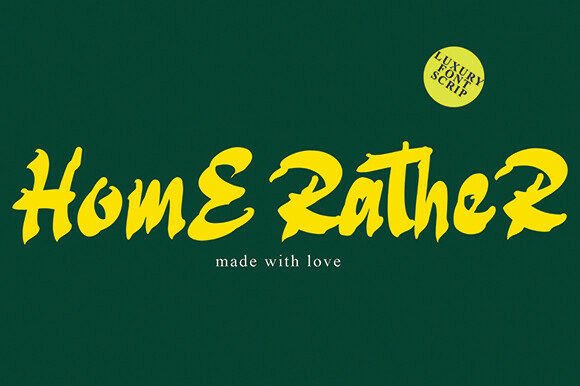
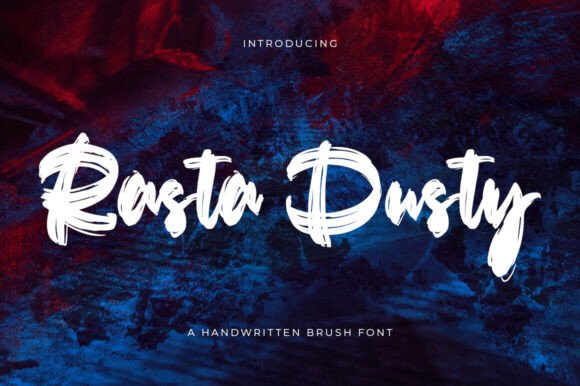
If you've ever spent hours tweaking a label, re-cutting a sticker because the letters didn’t flow right, or hesitated before listing a printable because the font felt “off,” you know how much a single typeface can shape your product’s first impression. That’s why Rasta Dusty stands out—not as another decorative script, but as a working handwritten font built for real craft and commerce. It’s a bold, expressive brush font from Script Amp that radiates energy and raw creativity—its strokes thick, textured, and organic, like real paintbrush marks pressed into paper or wood.
What makes Rasta Dusty especially valuable for makers isn’t just its visual charm—it’s how it performs across physical and digital products. Whether you're designing candle labels for your Etsy shop, printing boutique gift tags, cutting vinyl for farmhouse signs, or building Canva templates for digital downloads, this font delivers presence without sacrificing clarity. Its generous x-height and open counters keep even small-size text legible on 0.75" stickers or 2" product tags. And because the brush texture is intentionally varied—not overly pixelated or artificially smoothed—it holds up beautifully when printed on kraft paper, matte cardstock, or heat-pressed onto cotton tote bags.
Think about your best-selling item right now. Is it a seasonal greeting card? A wedding welcome board? A set of planner stickers? Rasta Dusty works powerfully in all those contexts—but with smart usage. It shines brightest as a display font: ideal for headlines, names, short phrases (“Hand-Poured,” “Made With Love,” “Est. 2021”), and signature lines on invitations. It’s not meant for body copy or long paragraphs—that’s where pairing becomes essential. I almost always pair Rasta Dusty with a clean, neutral sans serif (like Montserrat or Poppins) for supporting text. For example: Rasta Dusty for “Sarah & James” on a wedding invitation, then Montserrat Light for the date, time, and venue. That contrast creates hierarchy, professionalism, and warmth—all at once.
For physical product makers, readability on cutting machines matters deeply. Rasta Dusty cuts cleanly in Cricut Design Space and Silhouette Studio because its letterforms avoid ultra-thin joins or fragile serifs. I’ve used it successfully for 1.25" wooden spoon labels (with light sanding after cut), 3" acrylic keychain charms, and even ceramic mug decals—always at 18–24pt minimum size. On smaller items like tea bag tags or mini jar labels, I stick to uppercase-only phrases (“Earl Grey,” “Lavender Honey”) and avoid tight kerning adjustments unless previewing in high-res mockups first.
Seasonal and themed collections also benefit from Rasta Dusty’s expressive energy. Last holiday season, I used it for “Joyful Gatherings” on printable wall art—and customers specifically mentioned how “inviting” and “handmade-feeling” the typography looked. For spring launches, “Fresh Cut” on lavender soap labels gave instant artisan credibility. And yes—it handles multilingual accents well (including é, ñ, ü, ø), which helped me expand my digital planner bundles for international buyers without redesigning layouts.
One thing I appreciate as a small shop owner: Rasta Dusty includes stylistic alternates and ligatures. That means “The” doesn’t look repetitive across ten different product listings—you can rotate between three distinct capital T forms and two flowing “th” connections. These subtle variations add authenticity, especially in SVG-style designs where hand-drawn consistency matters more than rigid uniformity. The font files come in OTF and TTF formats, so whether you’re working in Adobe Illustrator, Procreate, or free tools like Inkscape, compatibility isn’t a hurdle.
Let’s talk about brand identity. When your shop leans into handmade, rustic, joyful, or soulful aesthetics—Rasta Dusty reinforces that story before a customer reads a single word. It signals care, craftsmanship, and personality. I’ve seen repeat buyers comment, “I recognize your tags instantly”—and 80% of that recognition comes from consistent, intentional typography. Using Rasta Dusty across packaging, social media banners, and digital download covers builds cohesion without needing a full logo suite.
Of course, practical use means understanding licensing. Rasta Dusty is a commercial font, meaning you’re fully covered to use it in physical products you sell (candles, mugs, apparel), digital printables (planners, calendars, worksheets), SVG files for crafters, client design work, and even merchandise you produce through third-party print-on-demand services. Just be sure to check the license details for limits on total sales volume or extended redistribution rights—especially if you’re bundling fonts into editable Canva templates for resale.
Real-world examples that worked for me:
- Candle labels: “Sage + Sea Salt” in Rasta Dusty over cream kraft labels—paired with a thin sans serif for scent notes and burn time.
- Wedding stationery: “Mr. & Mrs.” on foil-stamped welcome signs, with Rasta Dusty’s natural stroke variation adding tactile depth.
- Digital downloads: “Daily Intention” headers in Rasta Dusty on undated planner pages—customers love the grounded yet uplifting feel.
- Farmhouse signs: Cut from 1/4" pine, painted white, with Rasta Dusty stenciled in charcoal gray—no digital file needed, just a clean vector export.
Rasta Dusty isn’t about perfection—it’s about presence. It won’t look sterile or algorithmically generated. It carries weight, warmth, and intentionality. And in a marketplace where handmade goods compete with mass-produced alternatives, that distinction isn’t just aesthetic—it’s economic. When your typography feels human, your products do too.
If you’re choosing fonts based on how they’ll function—not just how they look in a specimen sheet—Rasta Dusty earns its place in your core design assets. It’s not background noise. It’s the voice behind your brand, written by hand, ready for the world.